

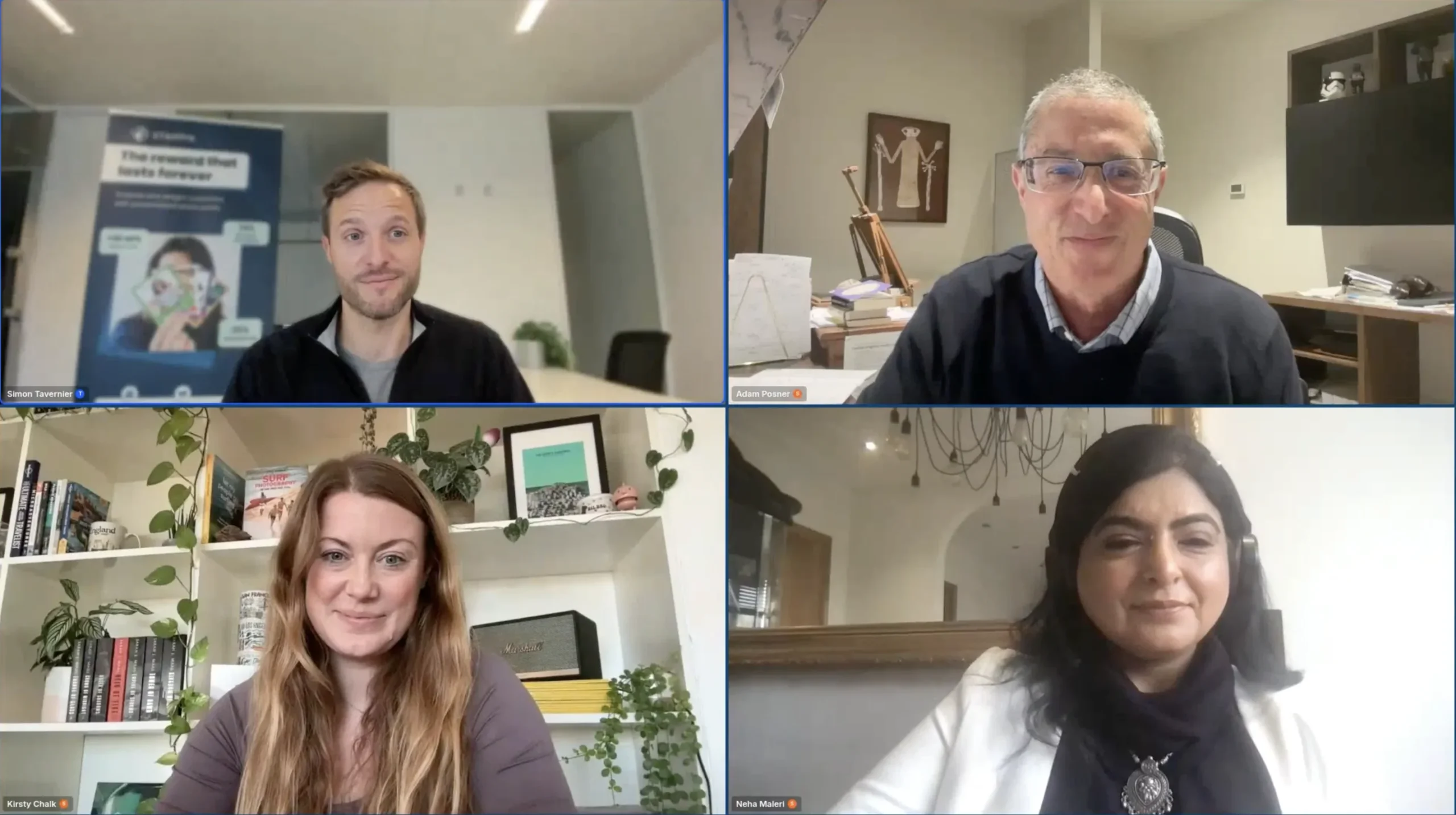
Insights inspired by our latest webinar Demystifying Birthday Rewards, with Adam Posner, McDonald’s and IKEA.
Birthday rewards are one of the most widely used loyalty tactics, and one of the most inconsistently executed.
During a recent Stampix webinar, loyalty expert Adam Posner analysed 25 real birthday rewards he personally received in his own inbox during his birthday. No surveys. No theory. Just first-hand experience across retail, food, lifestyle and services.
Combined with insights from Neha Maleri (McDonald’s) and Kirsty Chalk (IKEA), the discussion revealed a clear truth: Birthday rewards still work, but only when brands understand what customers actually value.
Here are 5 key learnings every brand should take away.
1. Birthday Rewards are expected, but not automatically appreciated
Birthdays remain one of the strongest loyalty moments. Consumer research shared during the webinar shows birthday rewards consistently rank among the top two moments customers expect brands to recognise.
From a performance perspective, the impact is clear. McDonald’s shared that birthday communications achieve an average open rate of 43.3%, compared to 26.1% for standard CRM emails.
However, Posner’s analysis found a “Memory Gap”. While most are opened, very few are actually remembered. To break through the noise, brands must use distinctive branding. For example, Diesel stood out with “This day hits different” rather than a generic “Happy Birthday“.
Another interesting examples to break this noise is Boost Juice’s strategy, who sent a “pre-birthday” teaser and a day-of reminder to keep the excitement alive.
Lesson:
Acknowledging a birthday is now table stakes. Creating a meaningful moment is the real challenge. Use a unique tone of voice and multi-stage communication to ensure your message is not just opened, but remembered.
2. Discounts is not a Birthday gift
Looking across the 25 birthday rewards Adam received, the most common format was also the least emotionally effective: discounts with conditions. This is one of the biggest friction points.
One striking example of “how NOT to do it” came from a telecom brand. A customer of 25 years with a lifetime value of $45,000 was sent a “gift” of a photo calendar, but was required to pay $8.99 in shipping to claim it. As the experts noted, if you ask the customer to reach into their wallet on their birthday, it’s not a gift; it’s a promotion.
This sentiment was echoed by brand leaders on the panel. IKEA highlighted that while threshold vouchers are often easy to justify internally, they rarely stand out emotionally.
Lesson:
On birthdays, customers want recognition, not a math problem. If your “gift” requires the customer to open their wallet, they will treat it like a standard promotion.
3. Simplicity and Choice drive redemption (and joy)
Among the 25 birthday rewards analysed, the strongest reactions came from offers that were simple and frictionless. One example shared during the webinar Demystifying Birthday Rewards was Baker’s Delight, which offers a free product with no conditions as a birthday gift, and sees an average 41% redemption rate on its birthday reward.
Neha, from McDonald’s, emphasises two key pillars for a redemption strategy:
- Choice: Give customers a choice (e.g., a morning coffee vs. an afternoon meal) to ensure the reward fits their specific habits.
- App Experience: Use “App Takeovers” or hero banners to make the customer feel special the moment they engage with the digital platform.
Lesson:
“Effort kills joy”. Ensure your reward is frictionless to redeem and, where possible, offer choices to increase relevance to the customer’s day.
4. Physical rewards create longer-lasting loyalty
One of the most striking contrasts in Adam Posner’s inbox was between rewards that were consumed instantly and those that were kept.
Physical birthday rewards, whether food, merchandise or printed items, created a different kind of impact. They didn’t just mark the day; they extended the moment. As Adam explained: “Physical rewards live beyond the birthday. They get used, shown, talked about, and remembered.”
Neha shared a case study of a Honda dealer that sent a Yeti mug and a physical card. The gift suited the size of the investment of buying a car, and, every time she uses the mug in public, it becomes an opportunity to generate word of mouth about the shop.
Lesson:
Physical rewards reinforce brand relationships long after the birthday has passed. If your budget allows, tangible items create far higher “shareability” and memory than a digital code
5. Timing and Relevance matter more than generosity
Timing is the emotional pulse of the birthday reward. As the panel mentioned “once the day has passed, the magic is gone. To solve it, our experts reached a consensus on the “Golden Rules” of timing:
- Before or On the Day: This feels natural and celebratory.
- The Birthday Month: IKEA often uses a 30-day validity window, which is perceived as practical and respectful of the customer’s schedule.
- The “Afterthought”: Sending a reward after the birthday is a “complete no”. It signals that the brand forgot the moment.
Relevance mattered just as much. Brands with low interaction frequency risked creating awkward moments by forcing intimacy where the relationship wasn’t strong, as Kirsty mentioned during the webinar.
Lesson:
Deliver your reward early or on the day, and ensure the redemption window is long enough to be useful without feeling like an afterthought.
What these 5 lessons really teach us
Because these insights came from real rewards received by a real person on their actual birthday, the conclusion is simple: Birthday rewards don’t fail because customers stopped caring. They fail because too many brands treat birthdays like campaigns instead of moments.
As Neha Maleri from McDonald’s summed it up: “True loyalty is built on emotion. Revenue is the lagging indicator”. Based on that, the most effective birthday rewards:
- Feel personal
- Feel effortless
- Feel aligned with the brand
- Create a memory, not just a transaction
It is clear to conclude that, in a crowded inbox, thoughtfulness is the real differentiator.
Subscribe to our Newsletter
Subscribe to receive our exclusive insights and events before everyone.
Start building a program that sparks joy and drives results.
Subscribe to our Newsletter
We promise we won’t flood you with emails! Every two months we will send you an insightful newsletter with marketing and loyalty news, interesting blogs and new product releases.